

Knitting: From origins to modern innovations

Knitting origins
One of my favorite podcasts on textiles is Haptic & Hue. In this month's episode, they take us to North Africa, Fair Isle in the Shetlands, and the Appalachians in the US in search of origins and traditions of knitting. (Support them by subscribing to their podcast if you can.)
In the episode, podcasters Jo Andrews and Bill Taylor talk with textile historian Irene Waggener who spent time in Morocco interviewing the Amazigh or Berber people about their ancient craft of knitting. The result of her time there was her book, The Keepers of the Sheep.
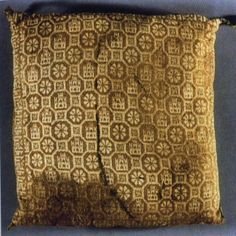
Waggener speculates that the migration of the Amazigh people in the conquest of Spain from 711-1492 brought with it the craft of knitting. These peoples moved back and forth between N. Africa and Spain and likely the craft went back and forth, too. We find evidence of knitting samples from the 12th Century in both Egypt and Las Huelgas, Spain.

Sock fragment from 12th Century Egypt, The Met, NYC
My total fascination and disbelief that I didn't know this before comes from my prior career - I was in academia and taught Spanish as a second language. I spent years studying Spain, its history, the impact of Moorish culture on Spain. Yet I never put together this history as being the vehicle by which knitting may have arrived to Western Europe. (Do my life career choices suddenly make sense now?!)
I'm also taken in by how intricate the patterns are on these samples. There's evidence of knitting in the round (see Bernadette de Costa Tempestad's replication link below).
I'm also intrigued by the tools - knitting needles made from bicycle spokes - that Waggener learned were used by the Amazigh people. Our founder, Sy, has shared this video of knitting by shepherds today in Kyrgyzstan. The knitting needles? Bicycle spokes.
This theory of how knitting arrived to Western Europe is just one; we have evidence of knitting existing early on all around the world (Caucuses, Estonia, Baltics, etc) and know that trade connected all of these areas (Silk Road, anyone?). I agree with Waggener when she says it's difficult to pinpoint exactly when and where knitting begins, but the fact that we see such intricate patterns in the 12th century leads me to believe it started much earlier than this.
Additional interesting resources on the origins of knitting
Bernadette de Costa Tempestad replication of Las Huelgas pillows
Online Book: History of Knitting Before Mass Production by Irena Turner
Great blogs: MI Impressions and This Man Knits
Knitting as innovation today
I learned about the articles on modern knitting innovation from another podcast/substack: Ashleigh-ellan's Substack.

Dress made from 17th century shipwreck wood, Aalto University, Finland
Researchers at Aalto University, Finland, turned unusable wood fragments from a 17th Century shipwreck into yarn using what the university claims to be an environmentally friendly Ioncell® process developed in a joint project by Aalto and Helsinki Universities that takes cellulose fibers and textile waste and turns them into yarn. A knitwear designer used a computer program to aid in the stitch pattern design and then knit the fabric with a knitting machine. The deep, rich brown color was inherent in the ancient wood; the fiber and yarn were not dyed or bleached.
This is an amazing innovation on so many fronts. First, it represents collaboration across disciplines - from the archeology to preserve the shipwreck discovery to the clever idea to see if yarn could be made from the Ioncell® process. The dress project connects chemistry, forestry, textile, and design/knitting experts. The Ioncell® process itself is encouraging to me since to my knowledge, most of the processes that turn cellulose fibers into yarn (like bamboo, wood, paper) rely on heavy chemicals and/or water to create yarn. I have avoided these materials because of that and knit with well, cashmere, camel, wool for its beauty, properties, and sustainability. But if this process can take waste (the wood fragments were in essence waste - and ancient waste at that) and sustainably turn it into yarn, that's a game changer.
The fact that knitting is involved also is amazing. It was clear from Waggener's interview that the knitting patterns and traditions passed down through generations orally are in danger of being lost in Northern Africa as the craft does not seem relevant to the lives of young men there today. The next article tells just why knitting is relevant today - maybe not directly in cultural contexts of daily living as with shepherd communities, but for science and technology, absolutely.
Knitting in science - and another dress

4D knit dress that changes with your body, MIT
It seems that MIT has created a 4D knit dress that changes style and fit on your body! The yarn is dynamic and can be placed strategically in the dress to change shape, insulation properties, style, size. This is bespoke tailoring beyond anything I imagined!
We've been talking all about style preferences and achieving fit in our Living your vest life KAL. We've discussed the fact that a single knitting pattern size can't possibly accommodate our body shapes or style tastes across all details of a garment. We are tailors of our own garments. The same goes for shopping for clothing - we have the dilemma of getting style and size to fit us. The technology is here to produce a 4D garment that can be adjusted by style and size. Don't want pin tucks? A heat gun can activate the dynamic fibers and change that. Since the garments are 4D printed, they create only the fabric needed (no waste).
It's not clear to me what the yarn is made of, only that it's heat activated. Beyond clothing, I immediately thought of medical applications and my head nearly exploded.
In some ways these modern innovations of an ancient handcraft are more than I can take in. I can see how they can solve damaging environmental problems inherent in fast fashion today, something that desperately is needed. But with all the technology around us today, we see research after research showing the benefits of hand knitting - calmness, brain function, hand dexterity, health improvement, creativity, and when we join together, community. We see the purpose it can give through projects such as ours of preserving the native goat in Kyrgyzstan to offering shepherds an additional income so that they may maintain the life they've carried on for centuries.
My final thought is this. May we continue to honor this ancient handcraft through continued learning of the craft, reading and replicating history, supporting sustainable yarns (our cashmere, wools, heritage breeds, organic cotton, linen), people in their craft (spinners, dyers, designers), while at the same time, borrow the best from knitting to benefit our future world in new, nearly unimaginable - yet sustainable! - ways. That feels obvious, but I feel protective of our handcrafts especially in our emerging AI world. At the same time, I cautiously want to embrace what can be good about technological advances. Do the preservation of handcraft and embracing technology have to cause tension? This is a topic that is expanding in new ways nearly by the minute. So yes, obvious final thought. . . that may evolve radically!
For more reading on these two innovative projects, Ashleigh-ellan offers an excellent reading list at the end of her article.
Thank you for reading and indulging my need to share and explore these articles with you. Until next time, may you find joy in knitting with our yarn! Warmly, Amy